
Uyghur PEN Board Members


Writers in Prison
-
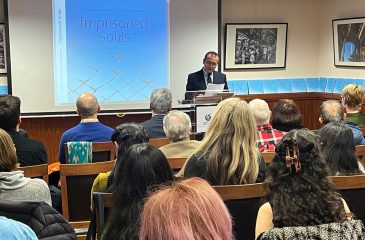
Bearing Witness to Imprisoned Souls
Aziz Isa Elkun’s Reflections On the Publication of the Uyghur Poetry AnthologyImprisoned Souls: Poems of Uyghur Prisoners in China Book Launch Speech by Aziz Isa Elkun16 December 2025, Yunus Emre Enstitüsü, London Throughout history, humanity has witnessed profound suffering from oppressive rulers and inhumane wars. The most powerful poetry, like other forms of artistic expression, often emerges from those who have endured unimaginable hardship: exploitation, poverty, invasion or genocide. As a reflection of the Uyghurs’ social and political struggles, their poetry has consistently expressed their desire to live freely in their homeland. Themes of love, survival, and the resolute determination for a better future have always been central to their work. Since completing my first major translation project, the anthology Uyghur Poems, published by the UK’s Everyman’s Library in October 2023, I have become deeply engaged in exploring Uyghur poetry further. My focus has increasingly shifted to the persecuted Uyghur poets. As I learned more about the ongoing persecution and extrajudicial punishments imposed on Uyghur intellectuals, particularly the mass detention, arrest, and disappearance of Uyghur poets, I became increasingly restless. The weight of these atrocities pressed upon me, and I felt a deep, unwavering need to bring their poetic voices to the wider world. The simple act of writing poems had led to their persecution, and I knew that their precious works must not be lost to silence. It became my mission to translate these poems and preserve the voices of those who are no longer able to speak. The knowledge that many of my poet friends are languishing in Chinese prisons has haunted me daily. Despite the challenges of obtaining reliable information about the detained and imprisoned Uyghur poets, I began my investigation in 2017. I began the painstaking task of collecting their poems from published books, magazines and online sources, […]
-

On World Poetry Day, do not forget imprisoned Uyghur poets
Today, March 21st, while celebrating World Poetry Day, please do not forget hundreds of innocent imprisoned Uyghur poets lying in Chinese prisons. Their only crime was writing poems in their God-given mother language, Uyghur. World Poetry Day is celebrated on 21 March, and it was designated by UNESCO in 1999 “with the aim of supporting linguistic diversity through poetic expression and increasing the opportunity for endangered languages to be heard”. Since 2017, China has arrested and persecuted more than 500 Uyghur poets, giving them lengthy prison sentences for their “crime” of writing poems. These poets, including prominent figures such as Abduqadir Jalalidin, Perhat Tursun, Ablet Abdureshid Berqi , Rahim Yasin Qaynami, Adil Tunyaz, and Gulnisa Imin Gulkhan, now find themselves behind bars, their only offence being the courageous act of sharing their voices through verse. The subsequent examples serve to illuminate the severe extrajudicial persecution endured by Uyghur poets at the hands of the Chinese government. Below, you will find excerpts from their poignant works: Abduqadir Jalalidin is a renowned Uyghur poet, scholar, and literature professor at Xinjiang “Normal” University. He was detained without reason in 2018 and since then his whereabouts are unknown. News that he was sentenced to 13 years in prison has sickened the Uyghur world, says Elkun. His poem, No Road Back Home, composed from his cell, was memorized by cellmates who, upon their release, recited it to prove to his family that he was still alive. An excerpt, translated by Munawwar Abdulla, was a rare glimpse of life behind bars in China, talking of a “broken heart, aching and longing” to be with his love, “tormented with no strength to move,” “watching the seasons change through cracks and crevices.” “I have no lover’s touch in this solitary corner, I have no amulet for each night […]
-

Heart and Soul: The Uighur Poets
BBC World Service 16 July 2021 Uighur poetry is and has been for centuries a fundamental part of the culture and members of the community write poetry and often recite part poems that have been passed down the generations and learn off by heart. As the community face widespread persecution by the Chinese authorities and at a time of great despair and fear for them, Uighurs speak to us about the ways in which poetry offers ways of support, succour and resistance. The programme features the voices and works of Uighurs, poets and experts from across the world.
-

“But a thorn was left in our tongue …”
by Aziz Isa Elkun 25 June 2021 Brussels Morning Newspaper London (Brussels Morning) The Uyghurs love poetry, which is very special to them. It is an essential part of Uyghur cultural heritage and expression, and plays an important role in the continuation of creativity and developing the Uyghur language and literature. The poet Adil Tunyaz shocked the Uyghur world with his poem, written in 1992, “Qeshqerdiki yershari” (The earth of the city of Kashgar). It was read by many Uyghurs, and he became one of our most celebrated poets, with a special place in the hearts of the Uyghurs. يۇلتۇزلار پەرۋاز قىلار تاڭ سەھەردە، پەسىللەر پەرۋاز قىلار دەرەخلەردە، بۇ شەھەر پەرۋاز قىلار چۆچەكلەردە. بۇ يەردىكى ئادەملەر، پەرۋاز قىلار يۈرەكلەردە. The stars are soaring at dawn, The seasons are flying in the trees, The city is soaring in legends. The people here, Soar in our hearts. Who is Adil Tunyaz? He was born in 1970 into a teacher’s family in Qaghiliq County of Kashgar Prefecture. After graduating from the Literature Faculty of Xinjiang University in 1993, he worked as a reporter for the Xinjiang People’s Radio Station in Urumchi. I first met Adil in September 1989 when both of us were studying at Xinjiang University. I studied Russian at the Foreign Languages Department, and Adil studied Literature at the Literature department. These two departments were located inside a two-storey Soviet-style building; we called it “seriq bina” (the yellow building) because its walls were painted yellow. In those years, our student lives were full of turmoil; we had experienced a series of demonstrations and protests in the fast-changing political landscape of China before the Tiananmen Student movement was brutally oppressed. Though we were university students, our daily life was regimented; we had two compulsory evening self-study sessions after dinner. Adil was interested in learning […]
-

Adil Tunyaz, a well-known Uyghur poet, arrested in 2017, and his fate is unknown
Published by Uyghur PEN on 18th June 2021 He was born in 1970 into a teacher’s family in Qaghiliq County of Kashgar Prefecture. After graduating from the Literature Faculty of Xinjiang University in 1993, he worked as a reporter for the Xinjiang People’s Radio Station. The Uyghurs love poetry, which is very special to them. It is an essential part of Uyghur cultural heritage and expression, and plays an important role in the continuation of creativity and developing the Uyghur language and literature. The poet Adil Tunyaz shocked the Uyghur world with his poem, written in 1992, “Qeshqerdiki yershari” (The earth of the city of Kashgar). It was read by many Uyghurs, and he became one of most celebrated poets, with a special place in the hearts of the Uyghurs. ,يۇلتۇزلار پەرۋاز قىلار تاڭ سەھەردە,پەسىللەر پەرۋاز قىلار دەرەخلەردە.بۇ شەھەر پەرۋاز قىلار چۆچەكلەردە,بۇ يەردىكى ئادەملەر.پەرۋاز قىلار يۈرەكلەردە The stars are soaring at dawn,The seasons are flying in the trees,The city is soaring in the legend.The people here,Soar in our hearts.[i] He published the following poetry collection books: “If I fell in love with you” (Söyü qalsam séni nawada); “The secrecy of a single poet” (Boytaq sha’irning mexpiyiti); “Eyes under the neqab” (Chumbeldiki köz); “The street on the sea” (Déngizdiki kocha). One article collection book: “Nights in the land of the Prophet” (Peyghembir diyaridiki kéchiler) According to the RFA Uyghur Service[ii] and United States Commission on International Religious Freedom[iii], “Adil Tuniyaz and his wife, Nezire Muhammad Salih, were both arrested in December 2017. Their eldest son, Imran (19 years old), was also arrested at a Beijing school where he was studying Arabic. Imran was reportedly sent to a detention facility in Xinjiang. It is believed that their three younger children have been placed in state-run orphanages for Uyghur youth whose guardians have been detained. Adil’s father-in-law, the well-known […]
-

#100PENMembers No. 87: Ahtam Omer
MAY 18, 2021 / WRITERSANDFREEEXPRESSION Today’s #100PENMembers is prominent Uyghur writer Ahtam Omer, recently sentenced to twenty years in prison by the authorities of the Xinjiang Uyghur Autonomous Region in China. He is the author of a well-known short story Child of the Eagle and the popular novel Greetings to the Homeland from Distant Horizon, which depicts the author’s first travel abroad and the comparisons that he makes with his homelife. He was taken from his home on 12 March 2017, a month after his brother and nephew. The reason given, according to witnesses, was that he had paid for his brother’s son to study in Egypt. Egypt is one of several countries blacklisted in the XUAR for travel by Uyghurs because of a perceived risk of their coming into contact with and being indoctrinated by Islamic extremists. He was charged with “separatism” in a secret trial in the Xuar capital, Urumqi in 2018. In 2020 several of his books – including Child of the Eagle – were burned by authorities. According to an RSA report ‘The story was initially published in China Ethnicities Literature, a national journal, and long stayed far away from any official criticism as a result. However, by 2017, as a wave of “looking to the past” had begun in the Xinjiang Uyghur Autonomous Region (XUAR), including in the field of literature, a number of books were rounded up under accusations that they contained separatist content.’ The book had a significant impact on Uyghur society because of its focus on the themes of freedom and the spirit of struggle. Omer’s arrest took place at the same time as authorities in the region began to detain an estimated 1.8 million Uyghur and other Muslim minorities in vast internment counts. The Chinese government has denied the existence of camps, then, in 2019, began to refer […]
-
-
-
-